By Andrew Loh, EarthScale Investor and Client Relations Lead
I recently moved to London from Australia and one of the things I was most excited about (sounds crazy, I know) was the Tube. The iconic map with all those neat-coloured lines promising quick routes and easy connections.
But then reality hit: way-too-crowded platforms, endless delays, and of course, the classic Tube strike – a total nightmare.
Funnily enough, networking events often remind me of this.
Slick branding and bold promises often make them look like well-oiled machines built for sparking conversations and getting things done. But the reality is usually more chaotic. A blur of unfamiliar faces, unfocused conversations, and rarely the chance to actually get things done.
The Drop was different.

The people who will solve climate change
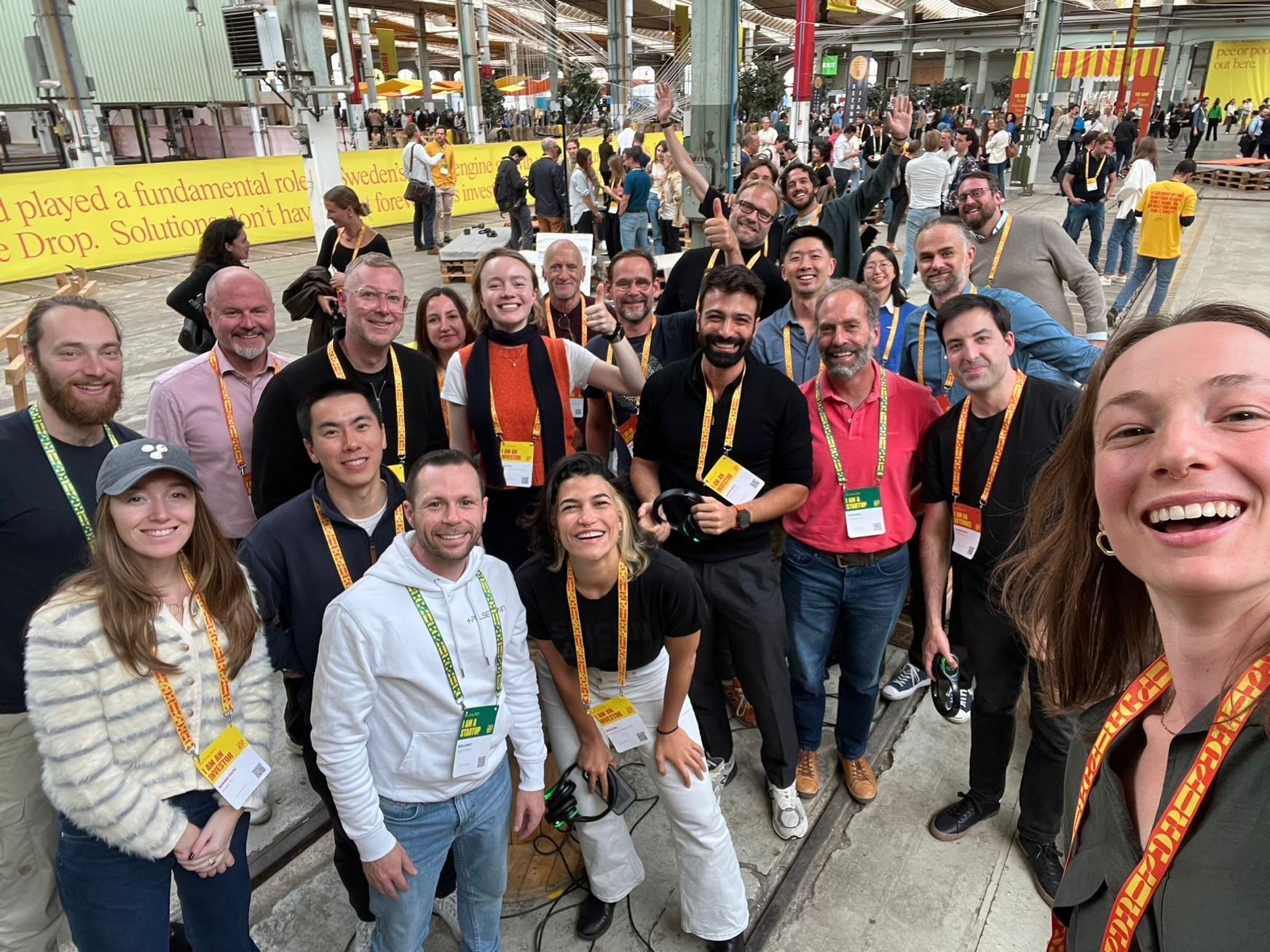
Hosted in a converted railway station in Malmö, Sweden, The Drop looked, at first glance, like a bougie music festival. Instead, it brought together two crucial groups, climate tech VCs and founders, sitting down with real intent to talk climate innovation.
In small roundtables, every ‘ripple’ became a focused conversation on scaling climate tech innovation, the funding mechanisms required, and building the partnerships needed to make it happen.
No gloss, just outcomes and actions.

Overheard at The Drop
Call it eavesdropping or not, I left with plenty of takeaways. And in typical investor update fashion, here’s the Good, the Bad and the Ugly.
The Good
Optimism for climate tech
Despite the political uncertainty spilling out of the US, there remains strong optimism around the role of climate innovation in delivering tangible outcomes. In fact, the uncertainty may help sharpen focus on founders who harness technological inflection points to deliver clear commercial value without relying on a ‘green premium’.
Sam Tidswell (ReGen Ventures) and Brett Bivens (July Fund) raised the idea of ‘urgent buyers’ – customers in crisis who take bigger risks and adopt faster, cutting through bureaucracy and driving stronger uptake.
New Innovations
There was a noticeable buzz around emerging areas of innovation. Energy was front and centre, with conversations on geothermal, fusion and grid resilience.
Lots of talk around batteries too. The manufacturing question loomed large, with many asking how Europe can compete with Asia and how to build production at home (e.g. through government support).
Also doubling down on critical material resilience- with growing questions on how to rethink supply chains end to end (new mining approaches to end-of-life recycling).
Flexible Funding Mechanisms
Momentum is building for more diverse funding, not just more capital. The real question: how can founders be better fits for these funding mechanisms?
Commercial milestones, supply models, technology readiness, and ecosystem partnerships – startups should think about their ‘laundry list’ to match their stage and structure with the right type of capital.
It’s also about access: cutting jargon, strengthening ecosystem ties, and signalling commercial progress (e.g. moving from LOIs to offtakes) to de-risk themselves and unlock investment appetite.
This draws from Contrarian Ventures and EQT Ventures, who created the Climate Brick – a resource every founder should know to map their commercial and funding pathway.

The Bad
UK-Europe Disconnect
It could be said that a disconnect has emerged between the UK and Europe. Post-Brexit, the UK now falls under ‘international allocation’ for European funds, which is limited by tax incentives. At the same time, UK startups are eyeing moves abroad, drawn by cheaper manufacturing and stronger grant incentives.
Of course, the UK remains a thriving climate tech ecosystem, but more work is needed to attract European talent, incubate our best startups, and support them to scale.
VC Hype Cycles
Are climate tech VC fund structures too influenced by market tailwinds and hype cycles? Is too much capital flowing into areas like AI and decarbonising data centres – valuable, yes, but at the expense of other critical needs?
There’s a sense that climate tech is forced into the VC box, when funding models should adapt to the climate tech box. More pathways are needed for non-venture-scalable but high-impact startups, especially in hard-to-abate sectors.
Will Dufton (Giant Ventures) and Mona Alsubaei (Transition VC) added another angle: Europe may be overemphasising product innovation (building new things), when lessons from China may highlight the importance of process innovation (improving how we scale and deploy).

The Ugly (but perhaps an opportunity)
US Retains the Edge
Despite political shifts, the US remains dominant. Climate tech VCs are still getting access to the best deals and technology.
Europe’s more conservative approach risks missing out on top-tier opportunities. Are we holding back too much? Do we need to make bigger bets on earlier-stage climate innovation to drive truly transformative change? Most say yes.
Universities and Corporates
There was plenty of discussion on the role of other key stakeholders in climate tech ventures – particularly universities and corporates.
Are they blockers or secret weapons?
The consensus: they could be force multipliers, if they move faster. By doing more to accelerate scaling pathways, whether through investment (e.g. CVCs) or support networks (e.g. university innovation centres).
Leone Baron (Pillar VC) and Lottie O’Brien-Gore (Nucleate) led a great conversation on unblocking the challenges of getting research out of universities, including exploring new routes to harness talent earlier.

My Why
At the end of the day, all these conversations don’t matter if we don’t take action.
That’s why I’m so excited about what I’m working on. I see a real gap.
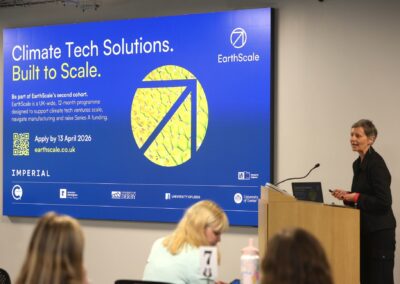
EarthScale is a bespoke programme that directly serves the needs of later-stage climate tech startups – those that need funding, manufacturing support, and corporate access – filling the missing middle.
I enjoyed my time in Malmö. Now my job is to turn a drop into a downpour – like a winter night in London.