
At the end of 2025, EarthScale selected sixteen pre-Series A climate tech ventures for its first cohort, inviting them into a 12-month programme designed to help them scale their businesses.
Each venture began the programme with a bespoke venture diagnostic, one of EarthScale’s flagship tools, designed to pinpoint scaling challenges, set measurable goals, and map out tailored support.
When we aggregated the results, the outcome was both sobering and reassuring. Sobering because the barriers are structural and recurring. Reassuring because the problems we had anticipated when designing EarthScale’s support were exactly what the founders raised most urgently. These were:
-
Manufacturing and technical
-
Commercial readiness
-
Capital
So, why is scaling climate tech so hard?
Before we dig into the details of each challenge, let’s look at the big picture. The UK is the world’s fourth-largest climate tech ecosystem, reflecting the strength of founders, universities and research in driving breakthroughs across sectors from energy to biomaterials. Yet this strength masks a growing fragility.
Climate tech investment has fallen from about $5.5 billion in 2023 to $1.8 billion in 2025. Around 70% of the market’s value is driven by hardware, the backbone of industrial decarbonisation and long-term resilience, and it is precisely these hardware-heavy, capital-intensive innovations that make investors most cautious.
Some call it the ‘missing middle’; others the more ominous ‘valley of death’. Both describe the same high-risk, capital-intensive, technically complex phase between prototype and commercial deployment that makes scaling (and providing effective support) so difficult.
EarthScale’s support
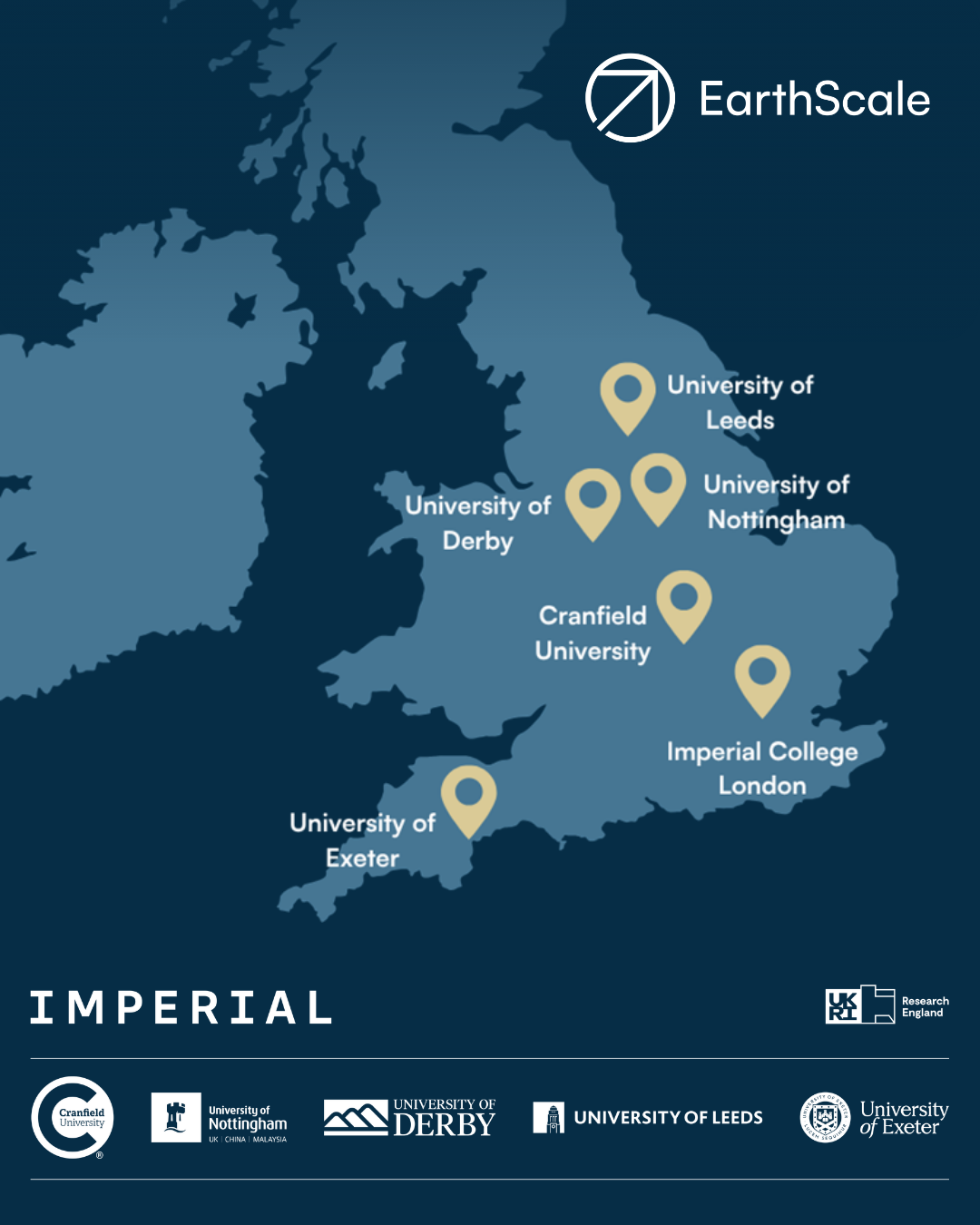
Created as a national experiment, EarthScale aims to bridge this gap for UK climate tech by combining structured diagnostics with targeted support. Led by Imperial College London and co-funded by the Research England Development Fund, EarthScale brings together a powerhouse network of UK universities Cranfield University, University of Derby, University of Exeter, University of Leeds, and University of Nottingham, to create a long-term ecosystem for scaling the most promising climate tech ventures.
This is how EarthScale is responding to the biggest scaling challenges founders shared with us.
1. Manufacturing and technical support
Building one or two units of a new technology can be done with ingenuity, minimal funding and the heroic efforts of a small team. But climate impact requires manufacturing at scale, which raises questions like: “How do I now build two hundred, or two thousand of these, consistently, reliably and at cost parity?”
Founders raised concerns around technical know-how in industrialisation processes and difficulties accessing the equipment and facilities needed for production development and testing.
EarthScale’s response has been intentionally pragmatic. A dedicated Technology Scale up Manager helps ventures navigate and access specialist labs, pilot facilities, and manufacturing capabilities across the UK, particularly within EarthScale’s university network, where unique equipment and expertise are readily available. Innovation vouchers then give teams a head start in securing this crucial technical support and making full use of the facilities across the network.
2. Commercial readiness
Ventures may have pilots underway but lack clear pathways to turn them into long-term commercial agreements. Structuring deals, especially in sectors such as energy and heavy industry, adds another layer of complexity, with regulation and compliance looming large.
The EarthScale programme provides tailored support for shaping and negotiating commercial agreements and converting pilots into a pipeline of paying customers.
3. Capital
Ultimately, many threads lead back to capital. The growth stage for hardware, asset-heavy companies and often FOAK (first-of-a-kind) innovations, struggle to attract funding because they do not fit neatly into traditional investor buckets. They are too early for infrastructure capital, too asset-heavy for private equity and too slow to profitability for many VCs.
And these ‘FOAKs’ are, by definition, the first implementation of a new idea, which oftentimes takes more time and money than expected to build and optimise. Yet there is only so much financial return that can be expected from a single project. The risks often outweigh the rewards, even when the technological and climate cases are strong.
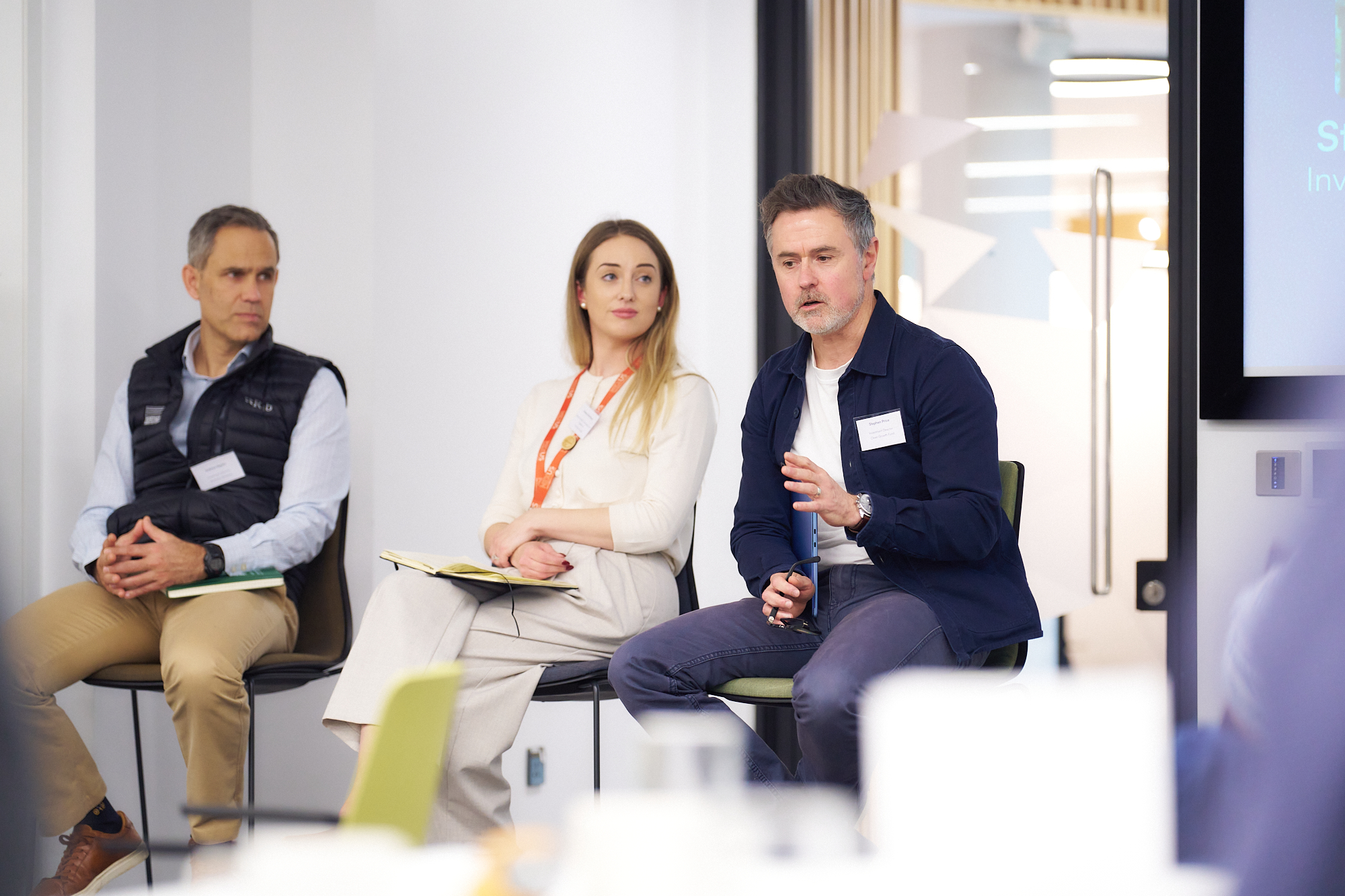
This perspective from Stephen Price, Investment Director at the Clean Growth Fund (pictured below), captures the tension well.
“There’s a wall of capital flowing into climate, with infrastructure investors taking more early-stage risk and becoming more innovative. However, the sector requires different expectations – hockey sticks and unicorns may be outliers in hardware businesses”
Some investors are moving earlier and taking more risk but the sector still needs a reset in expectations around returns and hardware timelines.
EarthScale will surface evidence-based insights into where ventures are struggling; connect founders with investors actively working to solve the missing middle problem; and help both sides better understand each other. That includes tailored investor introductions, one-to-one investment readiness coaching, and sessions on various topics from financial modelling to non-dilutive funding.
Of course, alongside the big three themes, we encouraged founders to share other support needs, from policy to marketing, and are building programming around those, too.
Beyond the valley
If our first cohort has made one thing impossible to ignore, it is that the UK does not have a climate innovation problem; it has a structural scaling problem. The ideas, technologies and talent exist. So do the barriers.
EarthScale is in a unique spot to connect ventures with the right facilities, expertise, and partners across regions, and to help them navigate manufacturing, commercialisation, and capital. In doing so, we aim to unlock a more active, long-term role for universities in supporting deep-tech climate ventures beyond the startup phase. By bringing together diverse institutional strengths, we are building a national network to scale climate solutions and strengthen the wider UK economy as a whole.
Climate impact happens at scale. That is the hard part, and that is exactly where EarthScale will be.
Get involved
If you want to be part of the solution, as a partner or collaborator, get in touch at [email protected].
Join a future cohort
Could you be part of the next EarthScale cohort? Applications for cohort 2 will open in February 2026. Sign up for the EarthScale newsletter to stay informed.